
Water Heater Leaking From Top
Water around the top of a water heater can come from a hot-water outlet, cold-water inlet, threaded connection, fitting, valve, or water that has run down from another po…
Explore this topic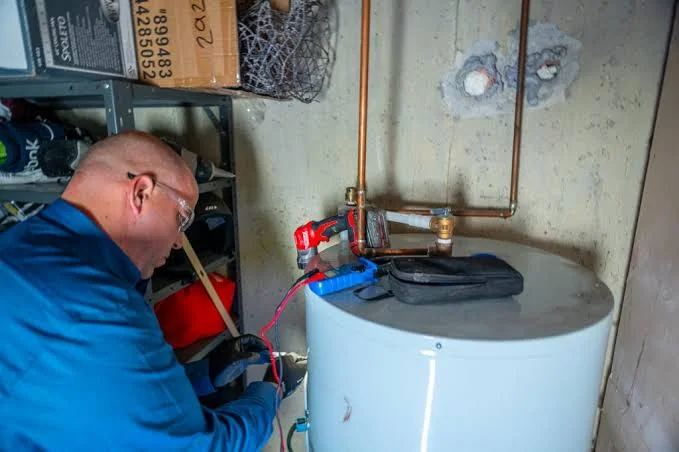
Water Heater Leak Repair · Union Township, NJ
Water around your water heater? Heater Shield connects callers in Union with an independent local plumbing provider. Call to discuss the leak, your address, and service availability.
Calls are forwarded to an independent local plumbing provider.
Start with a clear next step
A puddle beneath a water heater does not tell the whole story. Water can come from the cold-water inlet, hot-water outlet, drain valve, T&P relief valve, an electric-element gasket, a nearby pipe, condensation, or the tank itself. The right repair depends on tracing the water to its first point of escape.
Heater Shield is a referral service for people seeking water heater leak repair in Union, NJ. Call (908) 357-1776 and your call will be forwarded to an independent local plumbing provider. The provider can ask about the symptoms and confirm whether it handles your issue and address.
For a full explanation of the leak types, visit our pages about leaks from the top, leaks from the bottom, and T&P relief valve discharge.
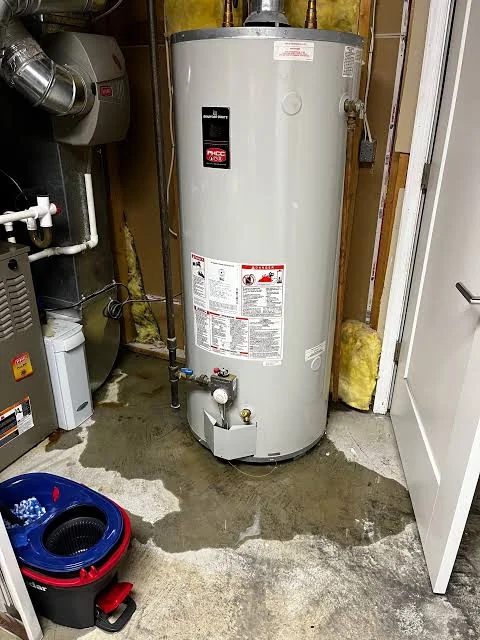
Leak repair topics
Describe what you see. The independent provider confirms the actual service scope and availability.
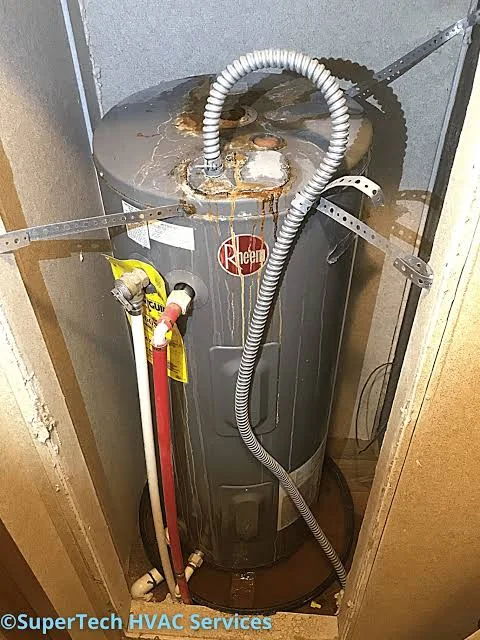
Water around the top of a water heater can come from a hot-water outlet, cold-water inlet, threaded connection, fitting, valve, or water that has run down from another po…
Explore this topicA puddle beneath a water heater deserves prompt attention, but it does not automatically prove that the tank has failed. Water may come from a drain valve, an electric-el…
Explore this topicThe temperature and pressure (T&P) relief valve is a safety device. Water at the valve or its discharge pipe may mean the valve is responding to temperature or pressure c…
Explore this topicThe drain valve is usually located near the lower part of a storage water heater and is used when the tank needs to be drained for service. If water is coming from the va…
Explore this topicA leak near a water heater may be in the plumbing that supplies the unit rather than inside the heater. Common areas to examine include the cold-water inlet, hot-water ou…
Explore this topicA gas water heater can develop a water leak at its tank, fittings, drain valve, relief-valve assembly, or connected plumbing. A gas odor is a separate and potentially urg…
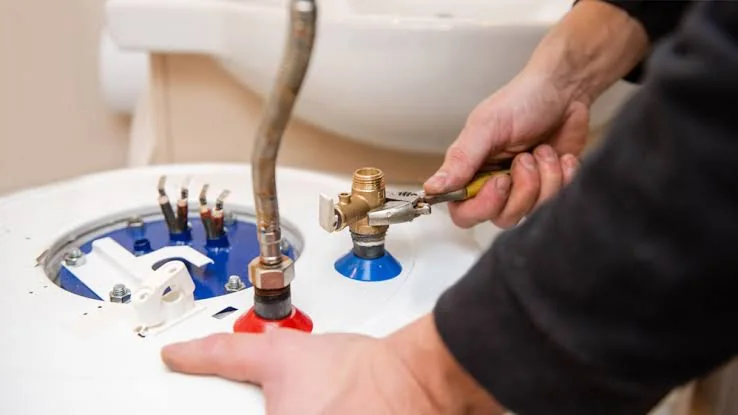
Explore this topicAn electric storage water heater may leak at an inlet or outlet connection, drain valve, T&P relief valve, element gasket, or tank shell. Water near electrical components…
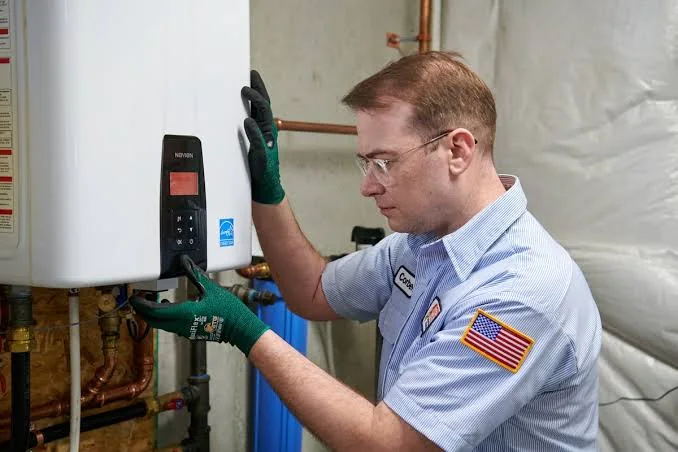
Explore this topicTankless water heaters do not store a large tank of hot water, but they still have water connections, isolation valves, seals, condensate pathways on applicable models, a…
Explore this topicA leaking water heater does not always need full replacement. A valve, fitting, gasket, or connected pipe may be repairable. But when a qualified professional confirms th…
Explore this topicAn active water heater leak can spread across a utility room, basement, garage, or finished floor. The immediate priority is keeping people away from hot water and electr…
Explore this topicUnderstand the symptoms
Manufacturer troubleshooting material lists several possible sources for water on the floor or in the drain pan. These include condensation, a drain valve, the T&P relief valve, inlet and outlet piping, gas-valve threaded connections on gas units, electric-element gaskets on electric units, and a leaking tank. That is why a puddle should be traced rather than assumed to mean the tank has failed.
Check the source around inlet/outlet piping, threaded fittings, valves, and nearby connections.
Top leak detailsThe drain valve, component seals, water tracking, condensation, or tank shell may be involved.
Bottom leak detailsA T&P valve may be releasing water because of a pressure or temperature condition.
T&P valve leak detailsTechnical reference: A. O. Smith Technical Bulletin 51 ↗.
What to do next
If water is near a receptacle, wiring, or an electrical panel, do not touch the equipment or enter standing water. Do not remove heater covers, cap a relief pipe, open gas controls, or drain a hot or pressurized tank. Share only what you can observe safely.
If you smell gas, leave and call 911 or the gas utility from a safe place. If a carbon-monoxide alarm sounds, move outside to fresh air, call emergency services, and do not re-enter until responders permit it. CPSC carbon-monoxide guidance ↗.
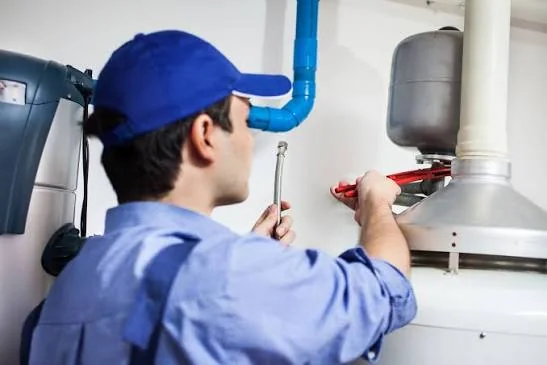
A transparent referral process
Use the call button and tell us the issue you are seeing and where the property is located.
Your call is forwarded to an independent local plumbing provider. Heater Shield does not perform the plumbing work.
The provider confirms whether it serves your address, handles the equipment, and is available. Ask it about charges and scheduling.
The provider explains its own findings, estimate, scope, and any work agreement directly with you.
Serving Union Township inquiries
Heater Shield’s campaign focuses on Union Township, including Vauxhall, Battle Hill, Union Center, Five Points, and Brookside Heights (Curryville). These are local area names—not separate Heater Shield offices. A provider confirms coverage for the specific street address.
Union Township identifies Union Center around Morris Avenue and Stuyvesant Avenue, while its planning material identifies Vauxhall north of I-78 and west of Stuyvesant Avenue. These local references help describe the area, but do not replace address-level service confirmation.
Explore the local pages for Vauxhall, Battle Hill, Union Center, Five Points, and Brookside Heights.
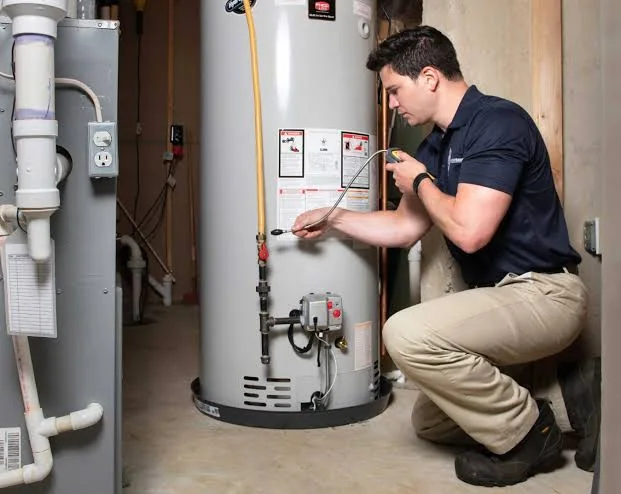
Water heater equipment and leak points
These images help show common equipment types and service contexts. The people pictured are not identified as Heater Shield employees or as the independent provider who may receive your call.
Helpful answers
Keep people away from hot water and any water near electrical equipment. Do not remove covers, cap a relief valve, or try to drain a hot or pressurized tank. Call for qualified help and describe what you can observe safely.
Not necessarily. Water may come from the drain valve, T&P relief valve, piping, an electric-element gasket, condensation, or the tank. A confirmed tank-shell leak is a different condition and generally means replacement.
No. A T&P valve is a safety device. Never cap, plug, clamp, or block its discharge pipe. The reason for discharge needs professional assessment.
No. Heater Shield is a referral service. Calls are forwarded to an independent local plumbing provider, who discusses the service and any work agreement directly with the caller.
No. The independent provider confirms current availability, hours, emergency response capability, and any charges. Heater Shield does not promise a response time.
You can call about storage-tank, gas, electric, and tankless water-heater leak concerns. The independent provider confirms whether it handles the specific make, model, fuel type, and issue.
Union, New Jersey
Call Heater Shield. Your call is forwarded to an independent local plumbing provider, who can confirm whether they handle your issue and address.